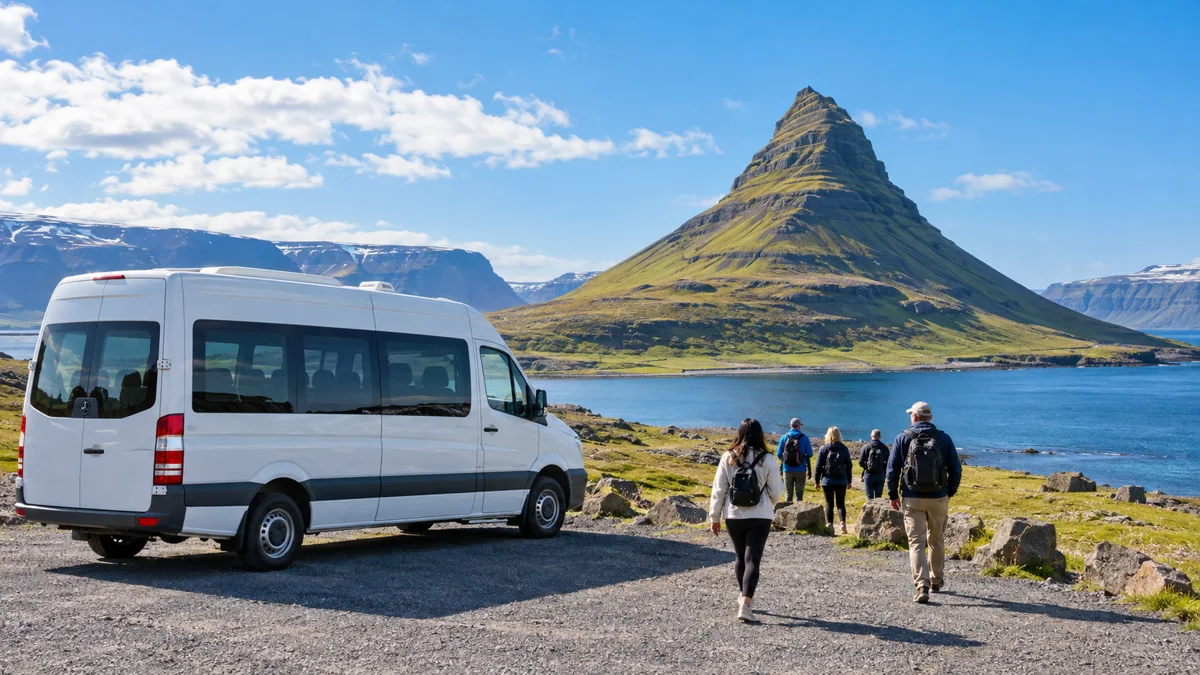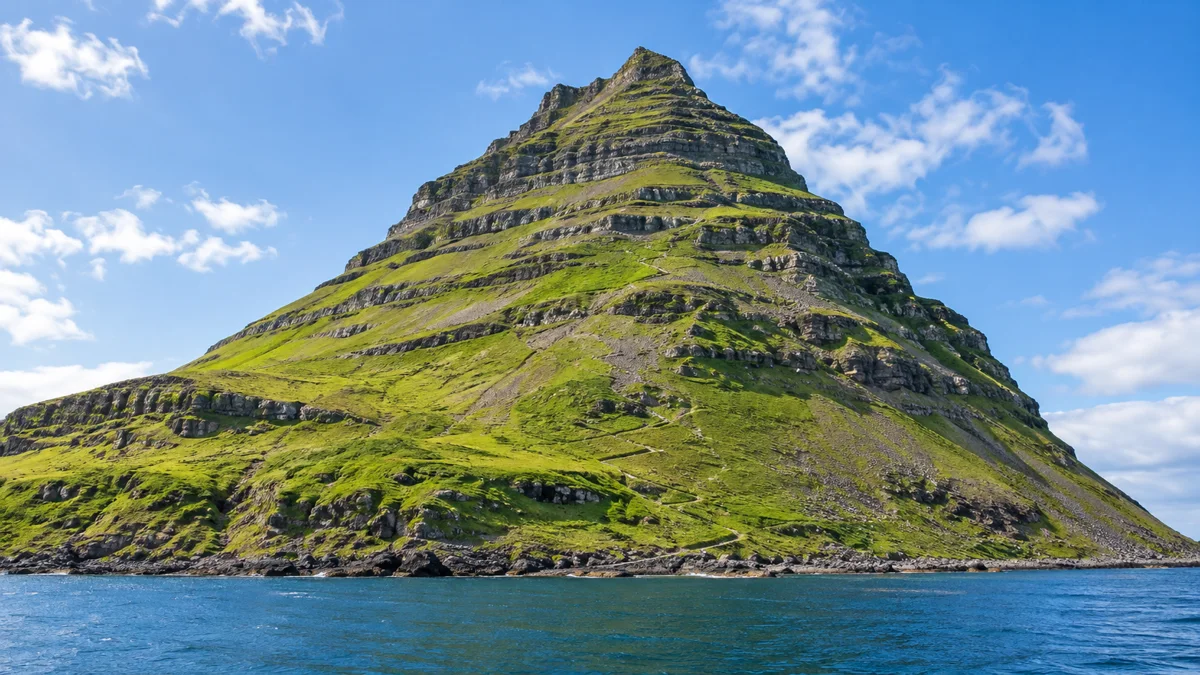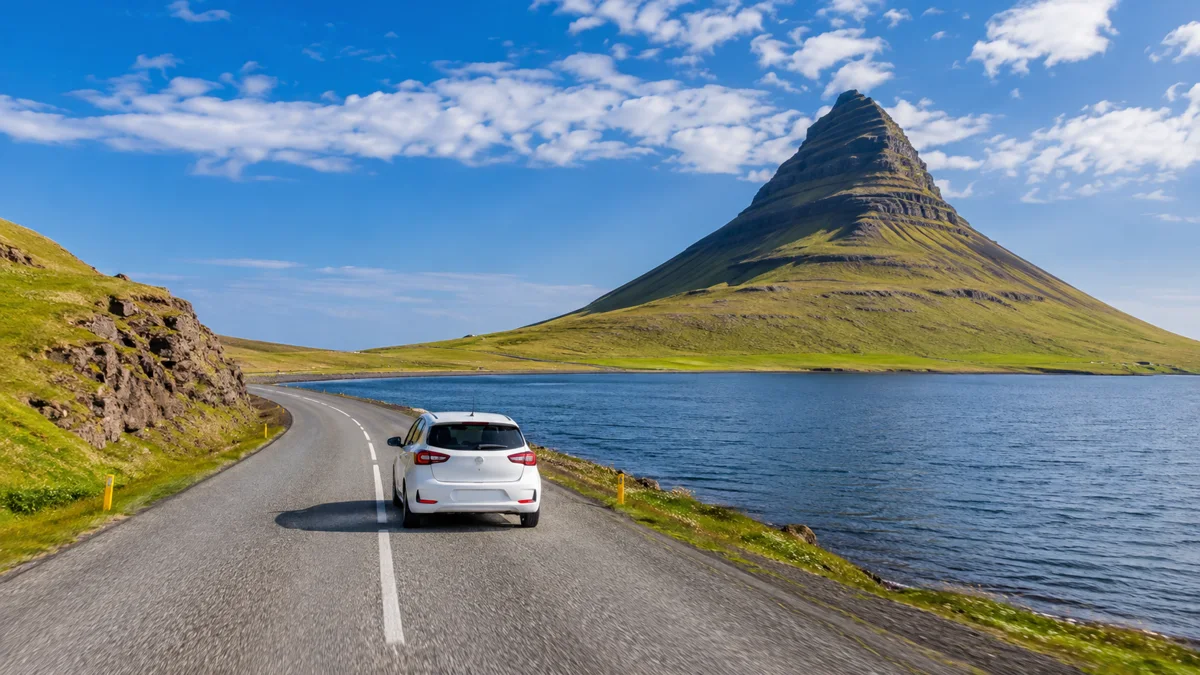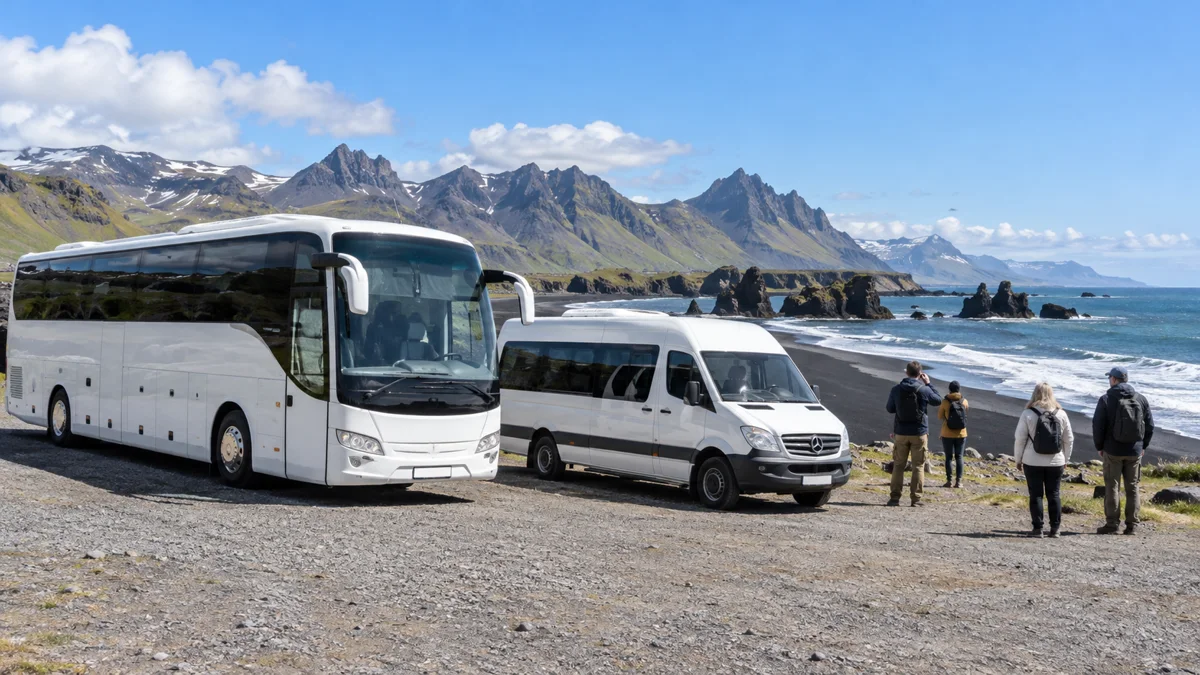
Booking choice: The two-day Snæfellsnes tour, from $559 per person. Check dates Tour details
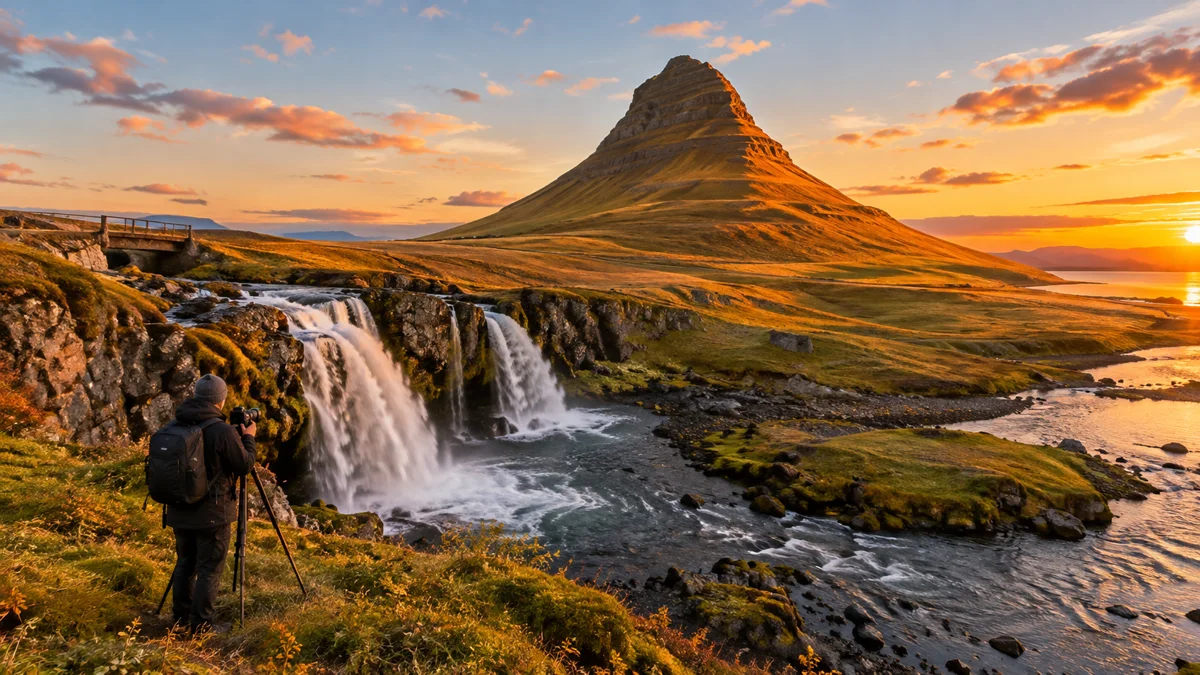
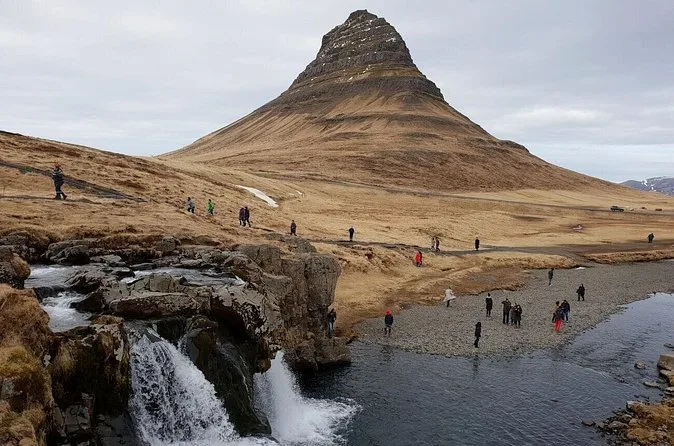
The famous frame is simple: the three small drops of Kirkjufellsfoss in front, the cone of Kirkjufell behind. In good light it is hard to get wrong. The difficulty is timing. In summer the light is best close to midnight; in winter the aurora needs a dark, clear night; and a day tour from Reykjavik gives you about 30 minutes in the middle of the day or at dusk.
This guide covers when to go, where to stand, and how to give yourself a real chance at the northern lights over the mountain.
The quick answer
For the northern lights, go between September and April on a clear, dark night and stay in Grundarfjörður; day tours are not built for it. For the midnight sun, late June to August between 11 p.m. and 1 a.m. For the classic falls shot without the crowd, come early or after 9 p.m. in summer. Bring a tripod and a wide lens, and check the cloud map on vedur.is, not only the aurora number.
Can you see the northern lights at Kirkjufell?
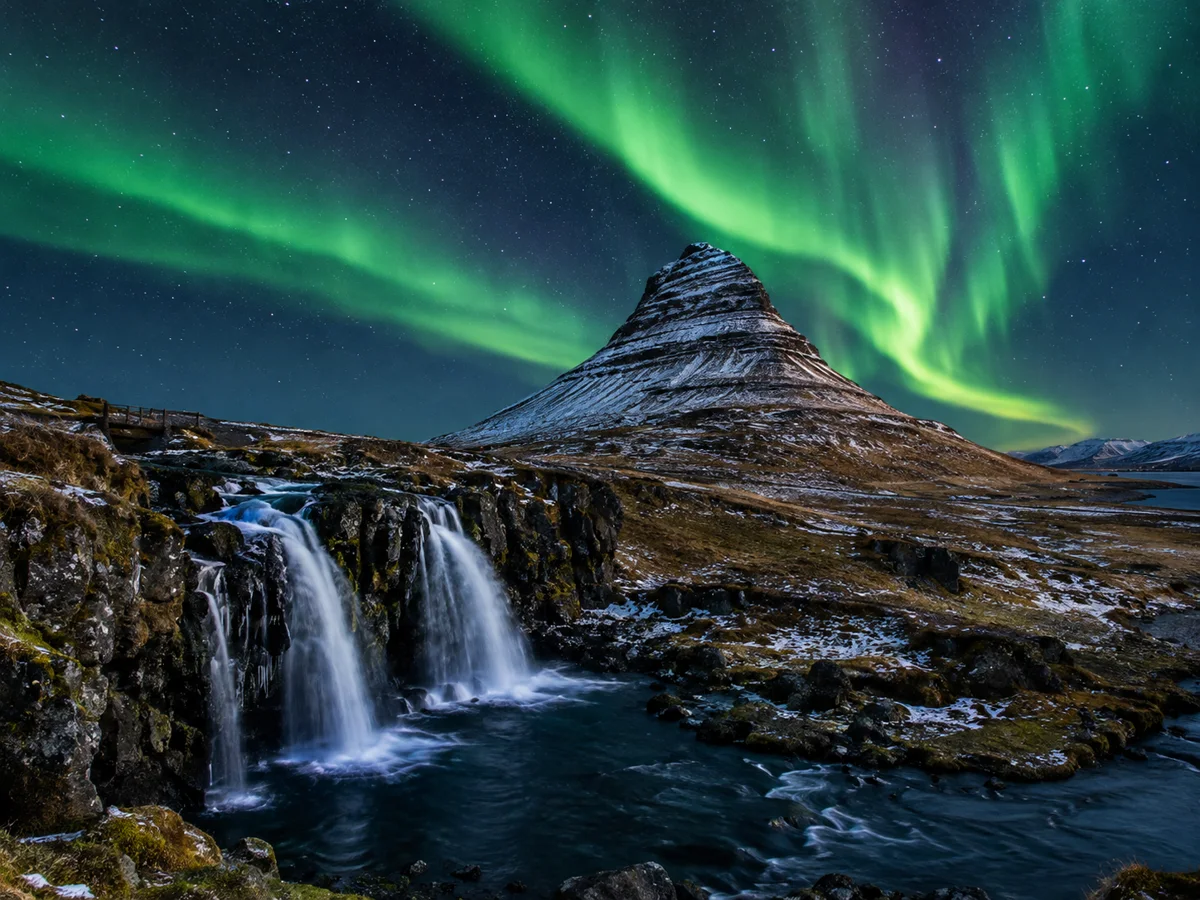
Yes, from roughly September to April on clear, dark nights. You need to be there after dark, ideally staying overnight nearby.
Iceland sits under the auroral oval, so activity of 2 or 3 on the forecast scale can already show over the mountain. What stops you is cloud, and the west coast of Snæfellsnes gets a lot of it. The pointed summit makes Kirkjufell a strong foreground; west.is lists winter aurora as one of the reasons to come.
Day tours do not promise aurora, and you should not expect it on one. In mid-winter a tour that ends at Kirkjufell can arrive in the dark, but it stays 25 to 30 minutes and leaves whatever the sky is doing. The realistic way is a night in Grundarfjörður, a few minutes' drive from the falls, with a car.
When is the best time of year to photograph Kirkjufell?
Late June to August for midnight sun; September to April for the aurora; October and March for both green or snowy ground and long nights.
What each part of the year gives you:
| Months | Light | What you get |
|---|---|---|
| Late June to August | Sun near the horizon for hours around midnight | Golden light at 11 p.m. to 1 a.m., green slopes, the busiest car park |
| September to October | Nights darken again | First aurora, autumn colours, fewer visitors |
| November to February | About 4 to 9 hours of daylight | Snow on the mountain, frozen falls, long aurora nights; roads and wind are the risk |
| March to April | Days lengthen fast | Snow still on the peak, aurora until about mid-April |
| May to mid-June | Almost no darkness | Fresh green, nesting birds, no aurora |
A local guide in Grundarfjörður notes that in winter the town itself loses the sun behind its mountains from November until early February (Guide to Iceland). The falls still catch low light.
How do you photograph the midnight sun at Kirkjufell?
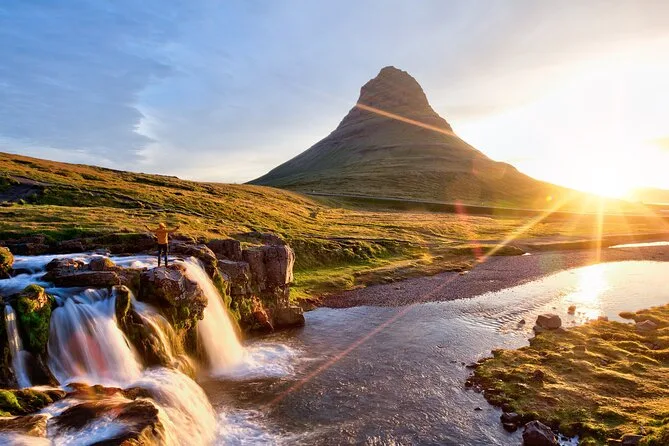
Be at the falls or the harbour between about 11 p.m. and 1 a.m. from late June to August, when the sun hangs just above the sea for hours.
This is the easiest great shot at Kirkjufell. The light stays warm for a long time and most of the day visitors have gone. Grundarfjörður locals recommend 11 p.m. to 1 a.m. for the classic frame. A day tour cannot get you here at that hour; you need a car and a bed nearby.
Around the June solstice Reykjavik has about 21 hours of daylight, and it never gets properly dark. That is great for photos and useless for the aurora.
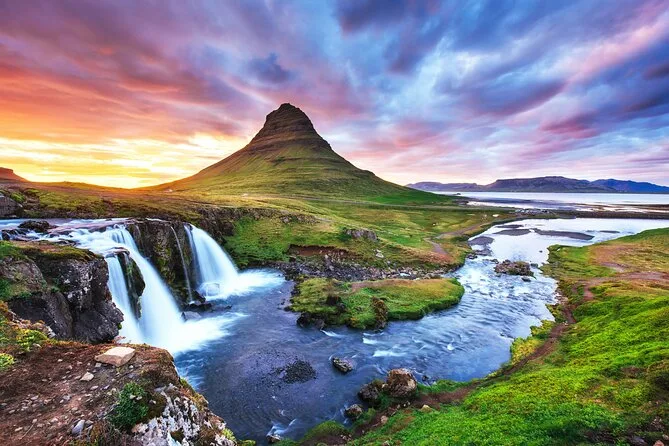
What time of day is best for photos at Kirkjufellsfoss?
Early morning or late evening. Midday in summer is when the coaches arrive and the footbridge fills.
The car park and footbridge are busiest from late morning to late afternoon in summer, when tours and self-drivers overlap. A photographer's guide to the spot, isnet.is, says crowds thin after 9 p.m. In winter the problem flips: the light is short, so you take what the day gives you between about 11 a.m. and 3:30 p.m.
On a tour you cannot choose the hour, but you can choose the direction. The premium small group reaches Kirkjufell first, in the morning. Nicetravel and Your Day Tours end there, toward evening.
Ending the day at Kirkjufell in the evening light: about 30 minutes at the falls, a group of 19 at most.
Check dates for the Nicetravel small groupWhere are the best photo spots around Kirkjufell?
The footbridge at Kirkjufellsfoss, the low ledge just above the falls, the harbour in Grundarfjörður, and the shore pools for reflections.
- The footbridge. The postcard view, falls in front, mountain behind. Busy.
- The bank above the falls. A short path along the river climbs to a small rise above Kirkjufellsfoss. Same view, cleaner foreground, fewer people.
- Grundarfjörður harbour. The mountain side-on across the water, with boats. Good at blue hour.
- The shore and lagoon west of the mountain. On a calm day the water mirrors the peak.
Stay on the paths. The riverbanks are slippery, the moss is fragile, and the land is private. Kirkjufellsfoss is private land, so a drone needs the landowner's permission.
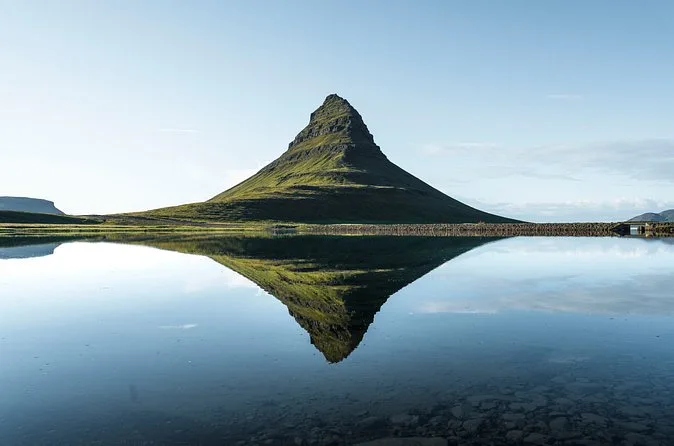
What camera settings work for the northern lights over Kirkjufell?
A tripod, a wide lens at its widest aperture, ISO 1600 to 3200 and exposures of about 5 to 15 seconds, with focus set by hand on a star.
- Lens: 14 to 24 mm on full frame, so the peak and a wide band of sky fit.
- Aperture: f/2.8 or as wide as it goes.
- Shutter: start at 10 seconds. Fast-moving aurora wants 2 to 5 seconds; faint glow wants 15 to 20.
- ISO: 1600 to 3200. Raise it before you slow the shutter.
- Focus: manual, on a bright star in live view. Tape the ring.
- White balance: around 3500 to 4000 K, or shoot raw and fix it later.
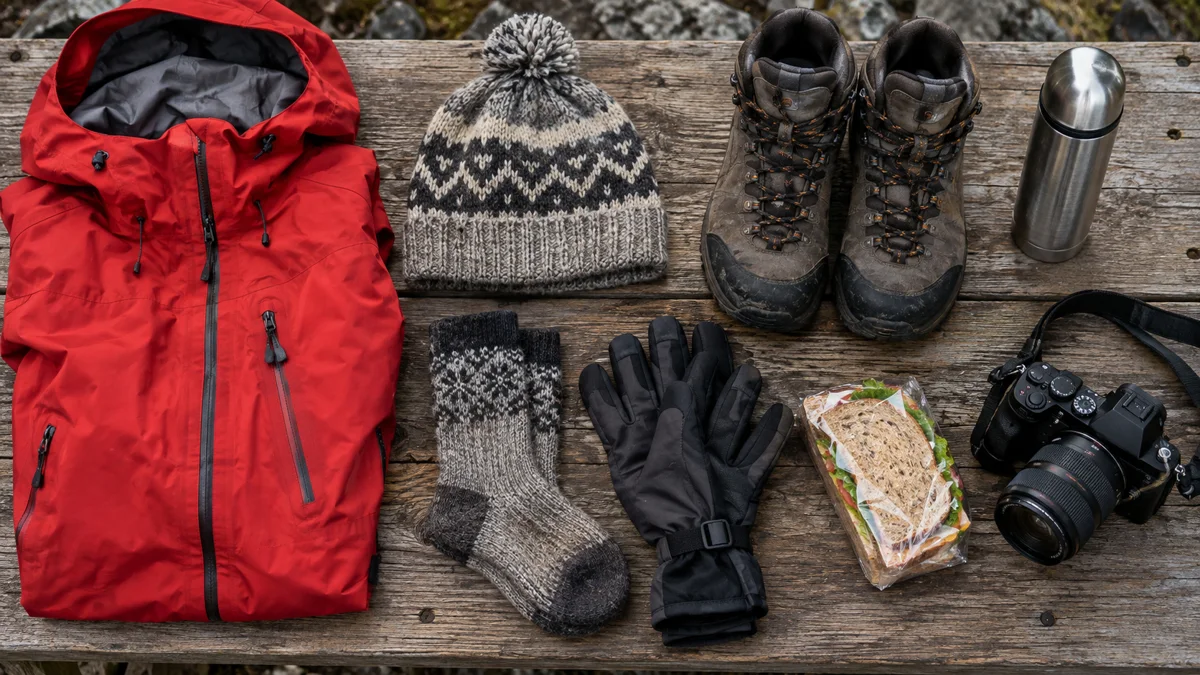
Phones manage in night mode on a steady surface. Bring spare batteries in an inside pocket; cold drains them fast.
How do you read the aurora forecast for Kirkjufell?
Check the cloud map first and the activity number second, on the Icelandic Met Office site, vedur.is.
The Icelandic Met Office aurora forecast shows activity on a 0 to 9 scale and a cloud cover map for the whole country. White on the map means clear sky; green means cloud. For Snæfellsnes, the cloud layer matters more than the number. A 2 under a clear sky beats a 6 under cloud.
Moonlight and late sunsets matter too. A full moon washes out a weak display; a new moon makes it pop. If the north coast is cloudy, the south side of the peninsula sometimes clears, and driving between them takes about an hour. Check the roads first on umferdin.is.
Can you photograph Kirkjufell properly on a tour?
You get one good frame in 20 to 40 minutes. For aurora or midnight sun, you need your own car or a night on the peninsula.
On a day tour, the 40-minute stop of Arctic Adventures is the most generous. Walk past the footbridge to the bank above the falls straight away, and you will have time for a few compositions. The two-day tour sleeps in Borgarnes and gives more light overall, but it also keeps Kirkjufell to about 30 minutes.
If photography is the point of your trip, the honest answer is a rental car and a night in Grundarfjörður. Driving yourself covers the route, the parking fee and winter roads.
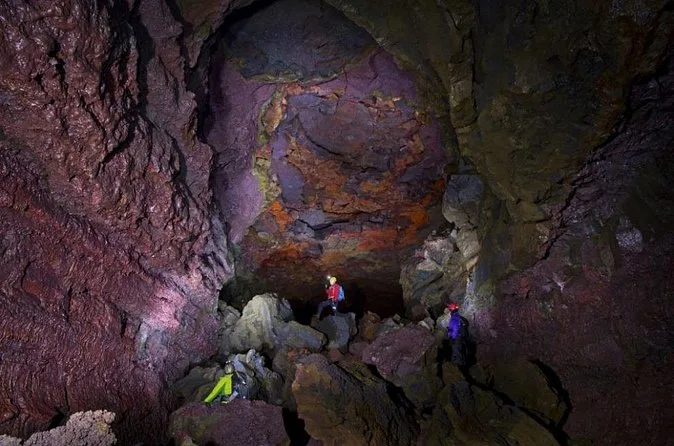
Two days instead of one: the Snæfellsnes loop with Kirkjufell, a hotel night in Borgarnes and the Víðgelmir lava cave.
Explore the two-day Snæfellsnes tour Tour detailsFrequently asked questions
Are the northern lights guaranteed on a Kirkjufell tour?
No. Day tours are timed for daylight sightseeing, and the aurora depends on darkness, clear sky and solar activity. No operator can promise it.
What is the best month for northern lights at Kirkjufell?
Any month from September to April can deliver. The long nights of November to February give the most hours of darkness; September, October and March often have milder weather.
Is the Kirkjufellsfoss car park open at night?
Yes. The fee is charged 24 hours a day, all year: 1,400 ISK for a small car, by app, QR code or payment machine. There are no lights or toilets, so bring a headlamp.
Do I need a tripod at Kirkjufell?
For the aurora and for silky water at the falls, yes. In daylight a phone or handheld camera is fine.
Ready to book
Choose your tour
Free cancellation up to 24 hours before on every option. Prices are from-prices in USD and move with the season.
2-Day Snæfellsnes Tour with Lava Cave
A slower pace, a night in Borgarnes and the Víðgelmir lava cave
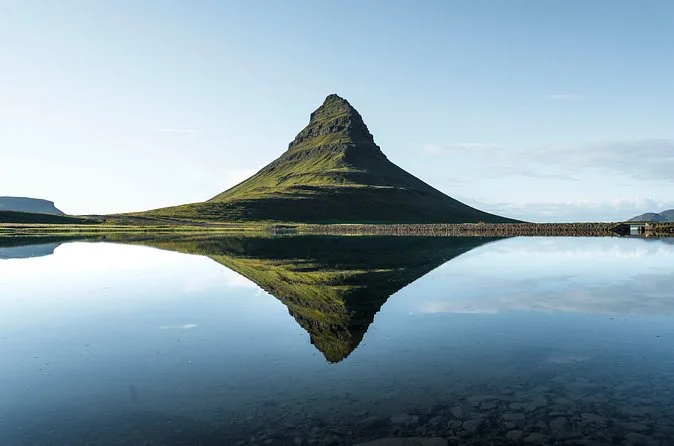
Snæfellsnes & Mount Kirkjufell Small-Group Tour
40 minutes at Kirkjufell, the longest stop of any day tour
Small-Group Snæfellsnes National Park Day Trip
Max 19, free hotel pickup, 30 minutes at Kirkjufell to finish